Mastering the Twenty Sided Dice SVG for Makers, Gamers and Designers
The twenty sided die, often called a D20, is far more than a random number generator for tabletop adventures. It has become a cultural icon representing chance, critical hits, and the unpredictable joy of shared storytelling. In recent years, that iconic shape has jumped from the gaming table onto clothing, home decor, stickers, and personalized gifts. At the center of this crossover sits a humble but powerful asset: the Twenty Sided Dice SVG. A single clean vector file can unlock projects across vinyl cutting, print-on-demand, laser engraving, and digital illustration. Understanding why this matters and how to use such a file wisely changes the way creators, small business owners, and gaming enthusiasts bring their ideas to life.
The Quiet Rise of Gaming Iconography in Everyday Design
Tabletop roleplaying games have moved solidly into mainstream culture, and with that shift comes a demand for visual symbols that feel personal and nuanced. Dice, character sheets, and fantasy motifs now appear in places you would not have expected a decade ago: laptop skins, enamel pins, wedding cake toppers, and even corporate team-building swag. A twenty sided dice SVG sits at this intersection. It provides a crisp, scalable shape that can be adapted to dozens of uses without losing quality. That matters in a world where consumers expect a product or a gift to feel specific, not generic.
Independent crafters and Etsy sellers often tell the same story: a well-chosen gaming SVG can become a bestseller on a mug or a tote bag because it connects emotionally with a passionate audience. When someone gifts a notebook decorated with a D20, the recipient sees their identity reflected. That emotional relevance is what transforms a simple vector file from a digital tool into a meaningful asset.
What Exactly Is a Twenty Sided Dice SVG and Why File Diversity Matters
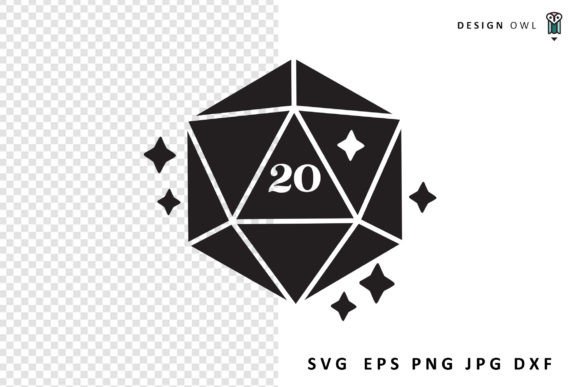
An SVG, or Scalable Vector Graphic, is a mathematical description of shapes rather than a grid of pixels. This means a Twenty Sided Dice SVG can be resized from a tiny sticker to a full wall decal without any loss of sharpness. But thoughtful designers understand that creators do not live in a single software ecosystem. That is why the file bundle includes JPG, PNG, EPS, and DXF alongside the SVG. Each format serves a different need.
A JPG or PNG might be perfect for quick uploads to a print service or for previewing a t-shirt mockup. EPS files slot naturally into professional vector workflows inside Adobe Illustrator or CorelDRAW. DXF is essential for those working with laser cutters or certain CAD programs. In practice, a crafter using a Cricut machine might rely on the SVG for vinyl cuts, while the PNG version becomes a social media teaser for the same item. Having all these formats in one download removes friction. It respects the reality that modern creative work often jumps between tools and platforms within a single project.
How Changing Creator Habits Shape the Demand for Versatile Gaming Files
Hobbyists and professionals alike now move fluidly between physical crafting and digital design. A parent making a birthday banner with a Cricut might also sell a matching printable on Gumroad. A game master designing custom screen inserts might laser-cut a wooden token and then use the same shape for a stream overlay. This crossover blurs the line between home crafting, content creation, and micro-entrepreneurship.
That blur is exactly why a single Twenty sided dice - Gaming SVG File with multiple format support fits modern workflows so well. You are not locked into one output. You can prototype a sticker in Silhouette Studio, export a variation for an embroidery file, and keep a high-resolution PNG ready for a YouTube thumbnail. The value lies in the flexibility, not just the shape itself. When people talk about "digital craft supplies," they do not just mean clip art; they mean building blocks for a range of revenue streams and creative experiments.
Putting the Twenty Sided Dice SVG into Action: Practical Applications
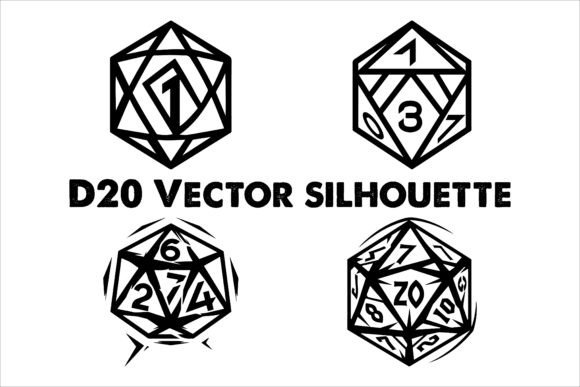
The most immediate uses lean toward customized apparel and accessories. A crisp D20 silhouette works exceptionally well on hoodies, canvas bags, and baseball caps. Because the SVG scales infinitely, the same file can produce a subtle chest logo and a bold full-back print. Heat transfer vinyl enthusiasts often note that clean, uncomplicated vector shapes weed more easily and last longer through washes. The twenty sided die, with its triangular facets and distinct outline, stays recognizable even when reduced to a single color.
Paper crafters find similar advantages. Greeting cards with a twenty sided dice motif appeal to gaming groups celebrating a campaign anniversary or a milestone birthday. When used with scoring tools and layered cardstock, a D20 cutout becomes a dimensional embellishment. The included DXF format means you can even explore wood or acrylic projects with a home laser cutter, turning the design into durable keychains, drink coasters, or drawer pulls for a gaming room.
Printable planners and journals form another growing niche. A small PNG or JPG of the die can decorate habit trackers, session notes, or goal-setting pages. Some bullet journal enthusiasts import the SVG into digital planning apps like GoodNotes, creating reusable stickers that speak to their hobbies. The image becomes a gentle visual anchor, reminding them to bring a playful, adventurous mindset to everyday tasks.
Choosing the Right Software for Your Specific D20 Project
Compatibility is rarely a one-click promise, but the formats provided in this bundle are designed to reduce barriers. Adobe Photoshop and Illustrator handle SVG, EPS, JPG, and PNG natively, which makes them go-to choices for those already in the Adobe ecosystem. However, the openly accessible Inkscape vector editor thrives on SVG import and offers powerful path editing for free. That means someone testing a business idea does not need a subscription to begin selling shirts or stickers.
Cricut Design Space and Silhouette Studio both accept SVG uploads. The key is to upload the vector format, not a raster image, when you want clean cut lines. For Cricut users, the software reads the SVG paths directly, so you can resize the die without pixelation and then let the machine precisely cut or draw the outline. Silhouette Studio Business Edition extends this with advanced welding and nesting features. For those working with DXF, programs like LightBurn or AutoCAD interpret the geometry for engraving or machining, which works beautifully for metal or leather projects. The EPS file serves as a universal handshake into professional print workflows, where prepress software expects encapsulated PostScript.
Designing with Intention: Beyond the Basic Silhouette
A twenty sided dice SVG can be a starting point rather than a finished product. Layering multiple copies at different opacities creates a sense of rolling motion, perfect for twitch banners or event posters. Combining the die shape with typography turns a simple greeting into a cohesive composition. Many creators add a subtle gradient inside the SVG using a clipping mask in Illustrator, giving the faces a metallic or gemstone effect while keeping the overall file lightweight and sharp.
Small business owners have discovered that recoloring the same D20 design for seasonal product drops—orange and black for Halloween game nights, icy blue for winter campaigns—keeps inventory fresh without requiring a new base asset. The clean vectors also make it easy to add custom text inside the die outline, such as a player character name or a memorable campaign date. This adaptability is what separates a static clipart file from a genuine creative partner.
What Crafters, Educators, and Entrepreneurs Should Keep in Mind
File quality matters far more than quantity. When evaluating any gaming SVG, look closely at node cleanliness. A well-constructed design has smooth curves, minimal extraneous points, and closed paths that cut reliably. The included D20 file benefits from that precision, which translates to faster weeding times and less material waste. For those new to cutting machines, a quick test cut on scrap material confirms that all lines read correctly. Scaling up to a 12-inch wall decal should be just as successful as a 2-inch sticker if the paths remain true.
Licensing is another practical layer. The intended use—personal projects, gifts, or products for sale—dictates whether the included design fits your needs. Always verify if the file clearance allows commercial output, as many designers provide standard licenses that cover physical goods sold in limited quantities. When in doubt, asking clarifies boundaries and prevents future frustration. This upfront clarity protects the trust between creator and consumer.
Educators and community organizers have also found a place for these graphics. A library hosting a teen D&D event might use the PNG on flyers and the SVG to cut stencils for T-shirt painting. A school club building a custom dice tray can import the DXF into a laser cutter and etch the pattern onto the wooden base. The digital file becomes a bridge between analog play and modern fabrication, and that is a powerful tool for engagement.
Moving Forward with Confidence in a Cross-Platform Creative Landscape
Tools evolve, but the need for reliable, flexible design assets does not. The Twenty Sided Dice SVG represents more than a geometric shape; it is a practical response to a creative landscape where audiences expect personalization and creators expect efficiency. Having one well-built design that opens in Photoshop, Illustrator, Inkscape, Cricut Design Space, Silhouette Studio, and beyond means you spend less time troubleshooting and more time bringing ideas into the physical world.
Whether you are designing your first enamel pin mockup or running a mature small business that ships weekly, the right file formats remove invisible barriers. They let you experiment across mediums, pivot when a material does not work, and scale a popular design without starting from scratch. That freedom is not just convenient; it is what keeps the joy in making things. The twenty sided die, after all, has always stood for chance and possibility. In the hands of someone willing to create, that symbol takes on a much larger role.